Elaeagnus angustifolia
Russian olive
A thorny, silver-leaved small tree historically used for shelterbelts, wildlife cover, and edible fruit—useful-looking only if you know what you are seeing.
Full plant guidePlants with a purpose
A North Alabama nursery for useful plants the big-box aisle overlooks—staple roots, stealthy edibles, rare fruit, resilient vines, and botanical oddities selected to make gardens more capable.
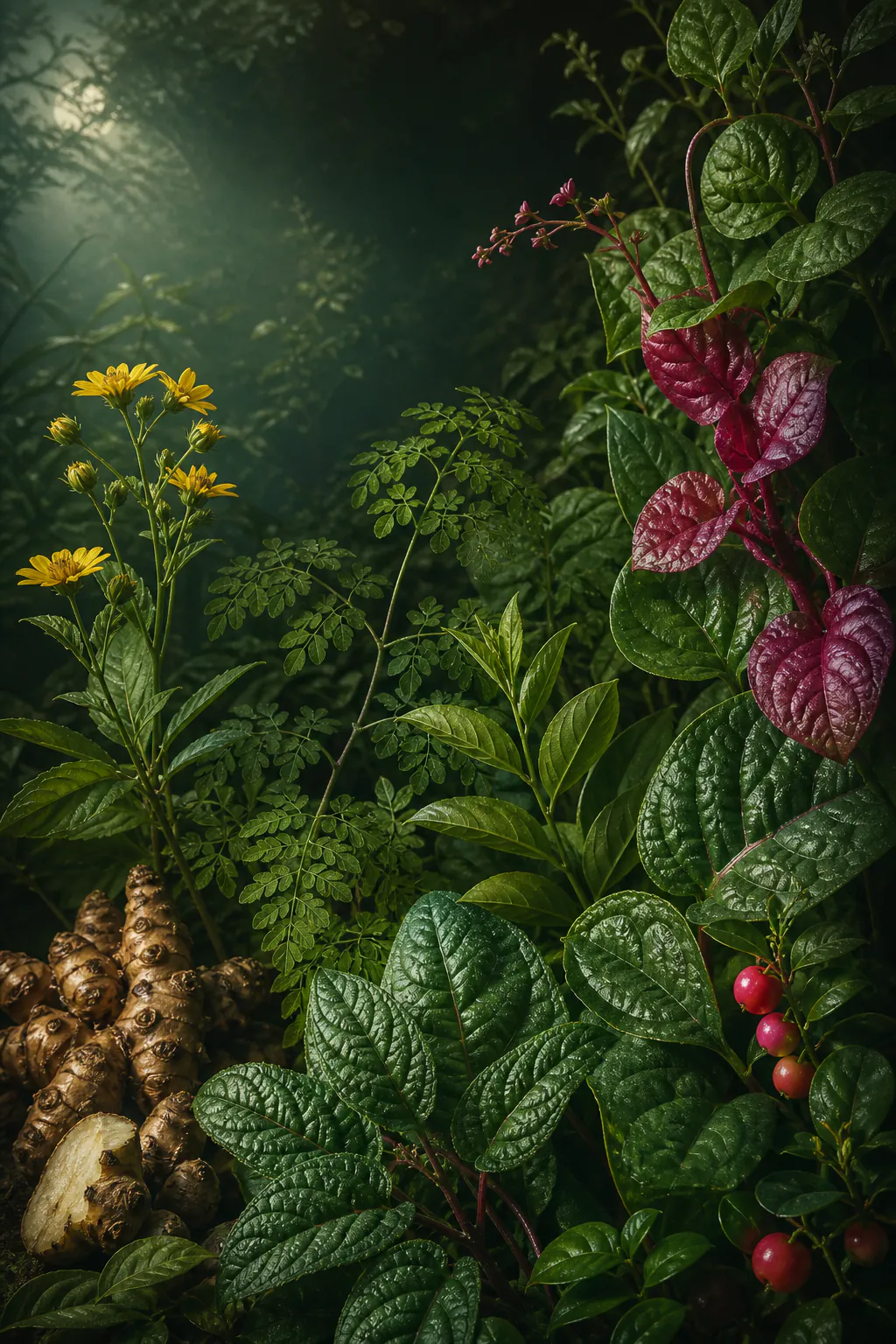
Odd plants.
Excellent reasons.
Sixteen founding plants
with countless useful roles
Grown for the curious, the practical & the wildly prepared
Start with the reason
Beauty is welcome here, but every plant must contribute. Pick a purpose and meet the unusual plants that answer it.
Meet the plants that work for a living
Browse the current field guide. Purpose, useful parts, growing conditions, and material cautions are never hidden behind the wonder.
Showing 16 of 16 founding plants · * reference pricing · currently sold out
Elaeagnus angustifolia
A thorny, silver-leaved small tree historically used for shelterbelts, wildlife cover, and edible fruit—useful-looking only if you know what you are seeing.
Full plant guideCaragana arborescens
A hard-country legume shrub historically planted for windbreaks, wildlife shelter, yellow spring flowers, and an uncommon cooked seed harvest.
Full plant guideMorus ‘Matsunaga’
A naturally compact mulberry selected to fruit young and produce on both old and new growth—small enough to bring repeated harvests into tighter gardens.
Full plant guideHelianthus tuberosus
A wall of sunflower-like blooms above a persistent underground crop—part staple bed, part privacy screen, and a useful source of inulin-rich tubers.
Full plant guideRubus chingii var. suavissimus
An ordinary-looking bramble with an extraordinary leaf: traditionally dried or steeped for a naturally sweet cup and a rare tea-garden centerpiece.
Full plant guideActinidia arguta
A vigorous trellis vine that bears smooth, grape-sized kiwi fruit—familiar flavor in a fruit most visitors will not immediately recognize.
Full plant guidePassiflora incarnata · maypop
A native perennial vine with extravagant lavender flowers, edible ripe fruit, and genuine habitat value—the tropical look without tropical fragility.
Full plant guideCucurbita moschata ‘Tromboncino’
Harvest the long, curling fruit young as summer squash or let it mature into a tan keeper squash—a dramatic annual that earns its trellis space twice.
Full plant guideMelothria scabra · Mexican mouse melon
A fine trellis vine covered in striped, bite-sized fruit that look like miniature watermelons and eat more like tart, crisp cucumbers.
Full plant guideApios americana
A North American legume that threads through support plants while building linked underground tubers—a layered harvest above and below the mulch.
Full plant guideDioscorea polystachya · formerly D. batatas
A temperate yam vine that makes small aerial bulbils along the stem and a deep underground tuber—a remarkable crop, but one that demands strict containment.
Full plant guideVanilla planifolia
A tropical orchid vine propagated from stem cuttings—the living source of vanilla pods and a long-horizon greenhouse crop for patient growers.
Full plant guideBeta vulgaris subsp. maritima
The coastal relative behind cultivated beet and chard: a low rosette of sturdy edible leaves selected for exposed, difficult ground rather than a swollen root.
Full plant guideBasella alba · green or ‘Rubra’
When ordinary spinach quits, Malabar climbs—glossy succulent greens from an emerald vine or the jewel-toned red-stemmed ‘Rubra’ selection.
Full plant guideAllium cepa var. proliferum
A hardy onion whose top-set bulbils bend toward the soil and begin the next clump—greens, small bulbs, and propagation material from one persistent patch.
Full plant guideIdentity under review · possible Rumex abyssinicus
An architectural, ordinary-looking green intended for soups and cooked dishes—a useful edible layer that does not advertise itself as a crop.
Full plant guideThe Green Fairy standard
We look beyond novelty to what a plant can contribute: calories, hidden harvests, unusual chemistry, habitat, structure, or several roles at once. Then we explain plainly how to grow it and where caution belongs.
Not the same short list found at every big-box garden center.
Every listing names the role it can play and the part worth growing.
Climate limits, preparation notes, spread, and safety are part of the story.
Clear guidance replaces miracle language and mystery-box marketing.
Find your useful unusual
Tell us what your climate feels like and what you want the garden to contribute. We’ll suggest a promising place to begin.
A more capable garden
We take preparedness seriously without selling panic. A resilient planting is a living library: calories underground, fruit overhead, vines on structure, and support species doing more than one job.
Read the resilience field notesChoose plants that wake, climb, or keep producing at different times.
Build beyond one familiar annual crop and one familiar edible part.
Match usefulness to your climate, soil, space, and appetite for management.
Restricted reference collection · not ordinary nursery inventory
Plants that puncture, sting, burn, poison, or spread beyond control. This archive exists for hazard recognition and lawful, professionally reviewed physical-boundary planning—not toxin preparation, poisoned hunting, traps, or weapons.
From field notes to first harvest
Clear, useful reading for gardeners who want curiosity with fewer surprises.
How to stack roots, vines, shrubs, and small trees into a quiet, harvestable food forest.
Read in the next field letterWhy sunchokes store energy differently—and why preparation and portion still matter in the kitchen.
Read in the next field letterBuild a living library of crops, skills, and planting material that makes the household more capable.
Read in the next field letter